Most People Don’t Know the Meaning of the Half Moon at the Base of the Nails
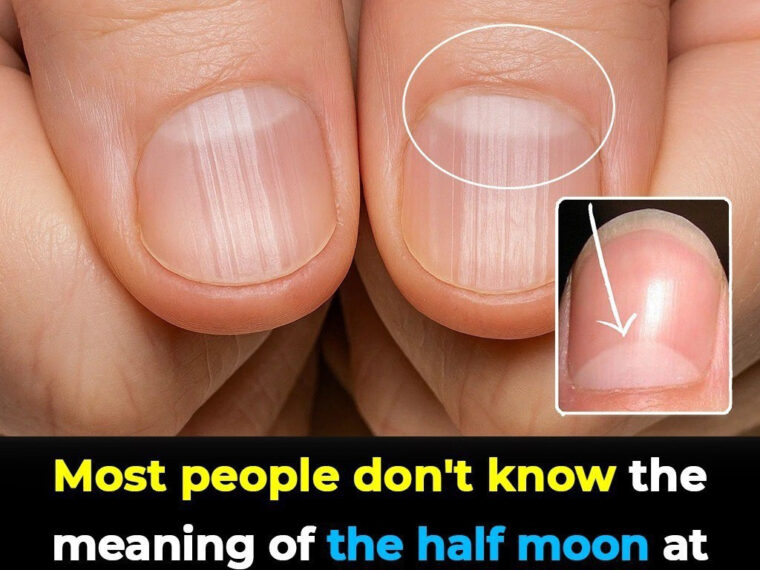
Look closely at your fingernails, especially your thumbs. At the base, you may notice a pale, crescent-shaped mark that looks like a tiny moon rising from beneath the nail. Many people see it every day without ever wondering what it is — and others panic when it seems to disappear.
This small shape is surrounded by myths, superstitions, and internet health claims. Some say it reveals vitamin deficiencies. Others believe it predicts illness, energy levels, or even personality traits.
In reality, the truth is far more grounded — and far more interesting.
What Is the Half Moon Called?
The half moon at the base of the nail is called the lunula, a name derived from the Latin word luna, meaning moon. It is not decoration, damage, or discoloration — it is a visible part of how your nail is formed.
The lunula is the visible portion of the nail matrix, the living tissue underneath the skin where nail growth begins. Every nail cell you see was once created in this hidden factory beneath the lunula.
Why Is the Lunula White?
The lunula appears white or pale because the cells in that area are not yet fully hardened (keratinized). Unlike the rest of the nail, these cells still scatter light rather than letting blood color show through, giving the lunula its milky appearance.
Once nail cells move forward and harden, they become transparent — which is why the rest of your nail looks pink.
Why You See It on Some Fingers but Not Others
Many people worry when they don’t see lunulae on all their nails, but this is completely normal.
- Lunulae are usually most visible on the thumbs
- They are often smaller or invisible on the index and middle fingers
- They are commonly absent on the pinky fingers
- Toenails rarely show visible lunulae
In many cases, the lunula is simply covered by skin or naturally small. Its absence does not automatically indicate a health problem.
Common Myths About the Lunula
The lunula has become a popular subject in alternative health discussions, leading to widespread misconceptions.
Myth 1: The Lunula Shows Vitamin Deficiencies
There is no direct medical evidence that lunula size or visibility reliably reflects vitamin or mineral levels.
Myth 2: No Lunula Means Poor Health
Many perfectly healthy people have faint or invisible lunulae. Genetics, nail shape, and skin thickness play a much larger role.
Myth 3: Bigger Lunula = Better Health
A larger lunula is not necessarily a sign of strength or vitality. In some cases, it can even be associated with certain conditions.
When the Lunula Can Be a Clue — Not a Diagnosis
While the lunula alone does not diagnose illness, sudden changes can sometimes be worth noting, especially if they appear alongside other symptoms.
- Very pale or disappearing lunulae may be seen in anemia or severe malnutrition
- Bluish lunulae are rare but can be associated with circulation or oxygenation issues
- Unusually large lunulae may appear in people with hyperthyroidism
Doctors do not use the lunula as a diagnostic tool by itself. It is only one small visual detail among many others.
Cultural and Symbolic Meanings
Across cultures, the half moon has long carried symbolic meaning.
In some traditions, the lunula is associated with:
- Life force and vitality
- Cycles and renewal
- Feminine energy and intuition
While these interpretations are symbolic rather than scientific, they reflect humanity’s long-standing fascination with the body as a mirror of inner life.
Why Children Often Have More Visible Lunulae
Children tend to have larger, clearer lunulae because their nails grow faster and their skin is thinner. As we age, skin thickens and nail growth slows, making the lunula less noticeable.
This change is a normal part of aging, not a sign of decline.
The Bottom Line
The half moon at the base of your nails is not a mystery signal from your body — it is simply a visible part of nail growth.
It does not predict disease, measure vitamins, or determine health on its own. Most of the time, it is just doing its quiet job beneath the surface, creating the nail you never think about.
Sometimes, the most misunderstood signs are simply the most ordinary ones.
And the next time you notice that small white crescent, you’ll know: it’s not a warning — it’s a beginning.