
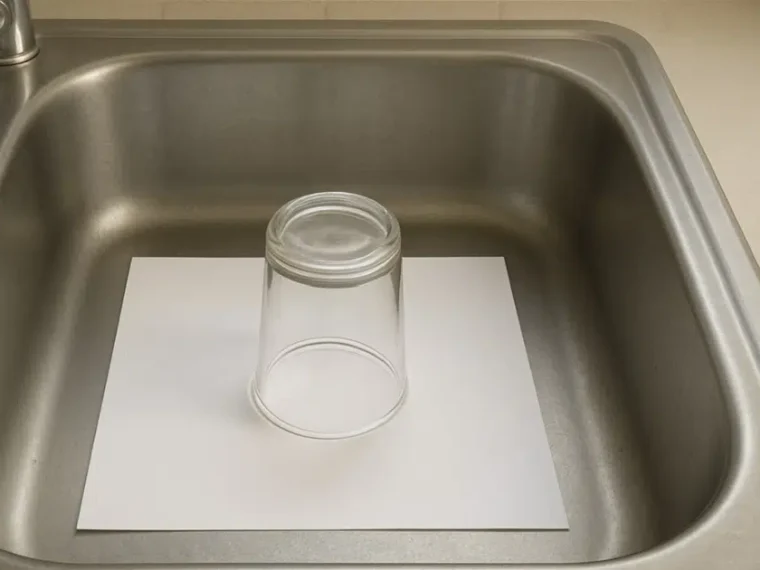
There’s a weird travel hack floating around that involves placing a sheet of paper and upside-down glass over your sink drain before leaving town. It supposedly helps prevent sewer smells and creepy crawlers from getting into your home through your drains while you’re gone. I’m always up for a good vacation prep hack, but this time I decided to dig a little deeper into why this idea exists and whether or not it works.
The idea behind this hack is legitimate. The P-trap, which is the curved, U-shaped pipe located beneath your sink, tub and floor drain, does hold water as a protective barrier against sewer gases and insects entering your home. However, the method shown in the viral photo is not a reliable way to protect your home.
Why Do People Think They Need This Hack? The Real Plumbing Issue Behind This Idea
As mentioned above, every sink, tub and floor drain in your home contains a small piece of plumbing magic referred to as a P-trap. Most people have heard of the P-trap, but may not know that the curve of the P-trap wasn’t designed to catch lost jewelry or hairballs, but rather to hold water on purpose. The water within the P-trap creates a physical barrier between your home and the large sewer system outside. This barrier is commonly known as the “water seal” and provides a level of protection by blocking unpleasant sewer gases and odors from entering your home.
However, if you leave a drain unused for a sufficient amount of time, the water will eventually evaporate, eliminating the protective barrier created by the P-trap. At this point, you may begin to notice a bad odor or worse yet, unwanted critters may begin to enter your home.
Therefore, the reasoning behind the viral hack is valid. If you plan to leave your home for a significant period of time, you do not want your P-traps to dry out.
How Often Does This Happen?
You don’t have to worry about evaporation occurring in the event of a weekend getaway or even a short business trip. In general, P-traps remain sealed for at least a couple of weeks, possibly even longer. However, in extreme circumstances, P-traps can dry up faster.
Extreme heat, dry environments, high levels of ventilation and/or air flow, and basement floor drains, laundry room standpipes and spare bathrooms tend to lose their water seal faster.
In most cases, this problem arises during longer trips, typically three weeks or more, or in areas of your home where the drain rarely receives water.

Does the “Paper & Upside-Down Glass” Trick Really Work?
While we should give credit to those who came up with this hack, there’s a logical premise behind it. If you cover a drain, it may slow down the rate of evaporation, and potentially block odors or insects from entering your home if the P-trap dries out. Therefore, the theory behind this hack is valid.
However, the implementation is where things fall apart.
Unless the upside-down glass creates a tight seal over the drain opening, it’s unlikely to do much of anything. Simply resting the upside-down glass in the sink basin is merely decorative. Additionally, the paper will likely become soggy and unsightly from moisture in the air, and will not form a true seal.
In fact, any slight jolt to the sink could dislodge the entire setup.
In conclusion, while the premise behind this hack is based on a real plumbing principle, the method depicted in the photo is not a reliable means of sealing your drains.
Prepping Your Drains Before Leaving Town: The Right Way
If you want to avoid bad odors, dried-up traps, and unwanted insects when returning from your trip, follow these steps to prepare your drains:
Step 1: Fill Up Your Traps
Before you leave for a trip, run water through each sink, shower and tub for approximately 10-20 seconds. Remember to include laundry drains or floor drains if you have them, and also flush all toilets once.
Refilling your traps with water will ensure that your water seal remains intact in all of your P-traps.
Step 2: Properly Seal Your Drains
If you’re planning to be away for an extended period of time, you’ll want to seal the drain openings. Here are a few options:
Use the existing stoppers (simply close them) and use a sink plug or rubber stopper that fits tightly;
Use silicone drain covers (these are super convenient and reusable);
Or even a piece of plastic wrap or painters tape in a pinch
Your goal is to minimize evaporation and create a physical barrier in the unlikely event that the water evaporates from your P-traps.
Step 3 (Optional for Longer Trips): Add Some Mineral Oil
This is another plumbing trick that I was taught by a 30+ year veteran plumber. Once you’ve run water through your drain, simply pour in about a tablespoon of mineral oil. This will float on top of the water and slow down evaporation dramatically.
Again, be aware that this is mineral oil, and not cooking oil, which may go rancid or clog your pipes.

Extra Vacation Plumbing Safety Measures (Because Why Not Take the Extra Step?)
Empty the trash and clean your garbage disposal. This will reduce any potential bad odors.
If you live in a cold climate and will be traveling during the winter months, check that your pipes are insulated to protect against freezing temperatures.
Finally, shutting off your main water valve while you’re away may offer some additional comfort. While this is entirely optional, it can also help protect against leaks or bursting pipes while you’re away.
Recap of Myth vs. Reality
Myth: A piece of paper and an upside-down glass placed in the sink will keep sewer smells at bay.
Reality: Unless the glass forms a tight seal, this method will fail to block odors, or much else. The real solution to preventing bad odors from entering your home is to maintain the integrity of the P-trap by filling it with water and sealing the drain properly.
Virally-popular ideas such as this often overlook the details of the problem and present a simplified solution that may not work as intended.
If you’re traveling and want to protect your home from potential problems caused by drying out of your P-traps, all you need to do is refill your traps with water and properly seal the drain openings. You won’t need to perform any complicated hacks or glass-balancing acts.