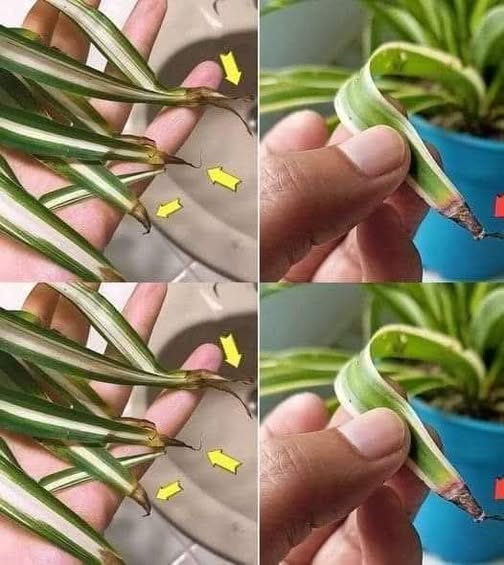
Spider plants (Chlorophytum comosum) are loved for their graceful green leaves and easy-going nature. But many plant owners notice a common and frustrating issue: brown tips on the leaves. While this problem is very common, it’s also usually easy to fix once you understand the cause.
Here are the main reasons spider plant tips turn brown and what you can do to keep your plant healthy and vibrant.
1. Fluoride and Chemicals in Tap Water
One of the most common causes of brown tips in spider plants is tap water. Many municipal water supplies contain fluoride, chlorine, and salts that spider plants are particularly sensitive to.
What to do:
-
Use filtered, distilled, or rainwater
-
Or let tap water sit out for 24 hours before watering so chemicals can dissipate
2. Salt Buildup from Fertilizer
Spider plants don’t need much fertilizer. Over time, excess fertilizer salts can accumulate in the soil and burn the leaf tips.
What to do:
-
Fertilize lightly, only during spring and summer
-
Flush the soil every few months by watering thoroughly and letting excess water drain out
-
Reduce fertilizer strength to half
3. Low Humidity
Spider plants prefer moderate humidity. Dry indoor air—especially in winter—can cause leaf tips to dry out and turn brown.
What to do:
-
Mist the plant occasionally
-
Place a tray of water nearby
-
Group plants together to raise humidity naturally
4. Underwatering or Irregular Watering
If the soil dries out too often or watering is inconsistent, spider plant leaves can become stressed, leading to browning tips.
What to do:
-
Water when the top inch of soil feels dry
-
Keep soil evenly moist but never soggy
5. Too Much Direct Sunlight
Spider plants like bright, indirect light. Direct sun can scorch the leaves, especially near windows.
What to do:
-
Move the plant away from harsh sunlight
-
Place it in a bright room with filtered light
6. Root Crowding (Being Pot-Bound)
Spider plants grow quickly and often become root-bound. When roots are crowded, water absorption becomes less efficient, causing stress symptoms like brown tips.
What to do:
-
Repot every 1–2 years
-
Choose a pot only slightly larger than the current one
Can You Cut Off the Brown Tips?
Yes! Trim brown tips with clean scissors, following the natural shape of the leaf. This improves appearance and doesn’t harm the plant.
✂️ Tip: Leave a tiny margin of brown to avoid cutting into healthy tissue.
Is a Spider Plant with Brown Tips Dying?
No. Brown tips are not a sign of a dying plant. They’re simply a response to environmental stress. With a few adjustments, new growth will appear healthy and green.
The Bottom Line
Brown tips on spider plants are usually caused by water quality, dry air, fertilizer buildup, or light issues—not disease. Once you identify the cause and make small changes, your spider plant will quickly bounce back.
Spider plants are resilient, forgiving, and perfect for beginners. A little care goes a long way in keeping them lush and beautiful.