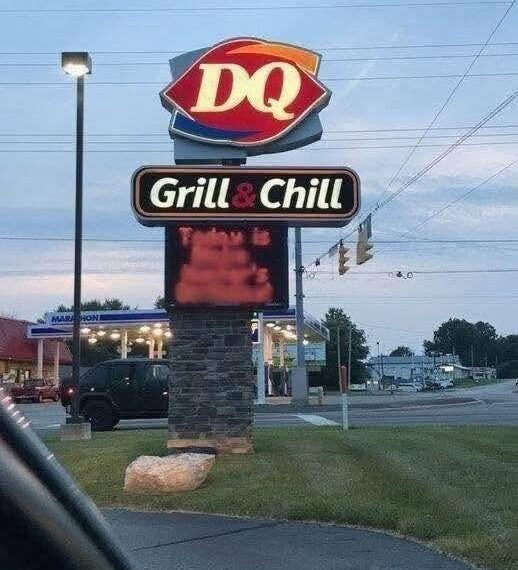
A small Dairy Queen restaurant in Kewaskum, Wisconsin, has once again become the center of a nationwide discussion after a sign outside the store went viral — and not everyone is pleased. The message, which included holiday greetings and an offer of free ice cream to veterans, has sparked a heated debate about free speech, inclusivity, and the role of personal beliefs in business.
In a time when many companies are careful about their public messaging, this hand-painted statement caught attention far beyond its small town of just over 4,000 residents. Supporters praise the message as a bold stand for tradition, while critics call it exclusionary and inappropriate for a business open to the public.
The Poster That Started It All
The now-infamous sign stood outside the Dairy Queen and read:
“This restaurant is politically incorrect.
We say Merry Christmas, God Bless America,
and offer free sundaes to veterans.”
To many, these messages — referencing holiday greetings, patriotic sentiments, and offers for veterans — felt like a simple expression of gratitude and tradition. To others, the phrasing was a loaded mix of social and cultural signals, especially the explicit labeling of the restaurant as “politically incorrect.”
While the sign itself was modest in size and style, its impact was anything but small. Soon after a photograph of it was shared on social media, it spread rapidly, drawing comments and reactions from across the United States.
Owner Defends Message, Refuses to Apologize
Owner Kevin Scheunemann, who operates the Dairy Queen franchise in Kewaskum, stood by the sign and its message. Scheunemann described the wording as a reflection of his personal values — emphasizing faith, patriotism, and appreciation for veterans — rather than an attempt to offend anyone.
“I’m not trying to offend anyone,” Scheunemann said in interviews. “I’m just sharing what I believe in — showing respect for our veterans, our country, and the traditions I grew up with.”
Despite mounting online criticism, the owner refused to apologize or remove the sign, saying he believed transparency about his views was important to him and his business.
This isn’t the first time a similar message has drawn attention. The sign originally gained traction years ago when a customer expressed displeasure over Christian music playing in the restaurant, after which Scheunemann says he put up signage to “disclose these kinds of expressions.”
National Reaction: Praise and Support
Many people responded to the sign with support, especially on social media. Veterans, small-business advocates, and others who felt the message reflected traditional American values praised the move as courageous and genuine.
Some supporters said they would travel long distances just to visit the Dairy Queen and show their approval. One local resident told reporters the restaurant has always been “friendly and welcoming,” and to them the sign simply reinforced what they see as the core values of their community.
On social platforms, many users echoed similar sentiments, framing the controversy as an example of people being overly sensitive in modern public discourse.
Critics Call It Exclusionary — and Tone-Deaf
But reaction wasn’t unanimous.
Critics argue the wording — particularly the explicit references to specific religious greetings and patriotism — could make some customers feel unwelcome or excluded, especially in a country where many different holiday traditions and backgrounds exist.
Some commentators pointed out that in a public-facing business, messages that lean toward particular cultural or religious expressions may unintentionally signal that certain customers are less valued. These critics say that simple, inclusive greetings might achieve community goodwill without sparking controversy.
One online commenter wrote that while the owner may intend goodwill, the sign’s language could inadvertently alienate people who don’t celebrate Christmas or share the same viewpoints.
Corporate Response: Independent Owner, Not Brand Policy
Dairy Queen’s corporate office weighed in on the situation, clarifying that the sign represented the views of this independent franchise owner only and not the company as a whole.
The corporation emphasized that it does not encourage franchisees to display non-business-related messages and reiterated its commitment to welcoming all customers regardless of background or belief.
Company spokespeople also reminded the public that individual franchise owners operate autonomously and are responsible for decisions about their own locations.
What This Means in a Broader Context
The viral nature of the Dairy Queen sign underscores how local messages can quickly become part of larger national conversations in the digital age. A modest sign in front of a small-town ice cream shop ended up touching on deeper themes that many Americans are debating: freedom of expression, inclusivity in public spaces, tradition vs. modernization, and the role of business in cultural conversations.
While some see this as a harmless expression of personal conviction, others view it as part of a trend where cultural and political beliefs spill into spaces once considered neutral or universal — like a stop for an ice cream cone.
In many ways, the controversy reflects broader societal tensions about how best to balance personal values with welcoming diversity. Whether or not one agrees with the sign’s message, the fact that it sparked widespread discussion shows how sensitive and complex issues involving language and identity have become in public life.
Looking Ahead
For now, the sign remains in place, and Scheunemann has no plans to change it. Supporters continue to rally around him, while critics argue the incident points to larger conversations about what public spaces should represent.
Regardless of perspective, this Dairy Queen — and its controversial sign — has become much more than a local ice cream stop. It’s now a symbol in the ongoing nationwide dialogue about how individuals and businesses navigate personal beliefs, commercial spaces, and community values in an era of heightened awareness and cultural debate.