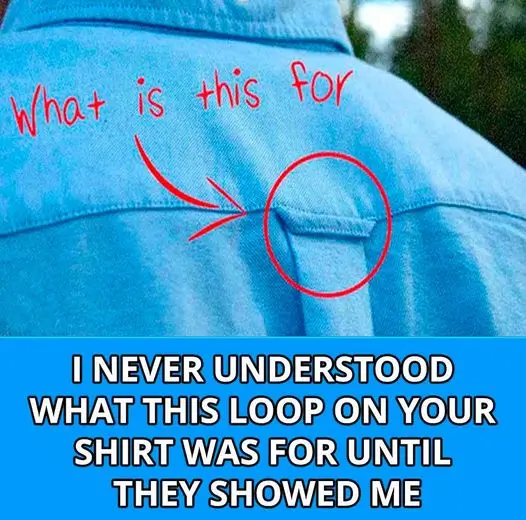
Have you ever noticed that small loop of fabric on the back of some shirts — usually just below the collar — and wondered: “What is this for?” You’re not alone! Many people have spotted this mysterious loop and assumed it was just a quirky design detail. But in fact, it has a practical and historical purpose that dates back decades.
Let’s uncover the surprising story behind this tiny but useful feature.
 The History Behind the Shirt Loop
The loop is officially known as a locker loop, and it originated in the 1960s with American brand GANT, a popular men’s shirt maker. The purpose? To provide a convenient way to hang a shirt in a gym locker — hence the name.
Before widespread use of plastic hangers or hooks in changing rooms, men often needed a way to hang their shirts without wrinkling them. This small loop allowed them to:
- Hang their shirt on a hook or peg
- Avoid placing it on the floor or crumpling it
- Keep it neat during sports or gym sessions
 From Practical to Fashion Statement
Soon, the locker loop became more than just functional. It evolved into a fashion statement, especially on Ivy League campuses and in preppy styles. The loop signaled that the shirt was high-quality and came from a trusted brand.
But there’s more…
In college culture, the locker loop also took on social symbolism:
- If a guy was dating someone seriously, he would cut the loop off his shirt to show he was “taken.”
- Conversely, girls would sometimes take the guy’s loop as a keepsake — similar to wearing a varsity jacket.
Yes, that tiny loop became part of campus romance traditions!
 Other Theories About the Loop
While the locker room explanation is the most widely accepted, some believe the loop could serve:
- As a guiding aid for aligning a shirt during manufacturing
- As a hang-drying tool for air drying shirts neatly
- As a tailoring signature for certain brands or shirt makers
Whatever the interpretation, the loop has become a curious and iconic detail in shirt design.
 Should You Use It to Hang Shirts Today?
Technically, yes — but with caution. Most locker loops are reinforced, but they aren’t meant to hold the full weight of a wet shirt or heavy jacket. Over time, tugging on the loop may cause tearing or seam damage if the stitching isn’t strong.
If you’re using it, it’s best for:
- Dry, lightweight shirts
- Temporary hanging, like in changing rooms or coat hooks
For long-term hanging or storing, a proper hanger is still the way to go.
 Do All Shirts Have This Loop
No — locker loops are most common on:
- Oxford button-down shirts
- Casual or preppy men’s shirts
- Some denim or workwear styles
Dress shirts, T-shirts, and women’s blouses typically do not have them unless added as a decorative or branding detail.
 A Small Detail With Big History
So, next time you spot that little loop on your shirt, remember: it’s not just a random piece of fabric. It’s a clever invention born from a need for convenience, elevated to a symbol of style and status, and still present in wardrobes today.
Who knew such a tiny loop could carry such a fascinating story?