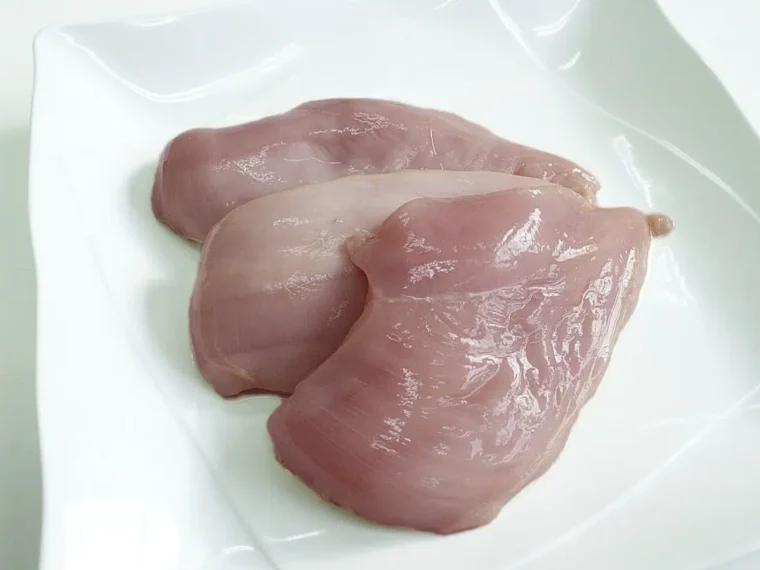
All right, I’ll admit: The first time I ever saw white gunk seep out of my chicken while it was roasting, I blanched. I’m talking just-tearing-yourself-apart, “Is tonight the night I’m going to make everyone sick at dinner?” kind of bit-levels of panic. I had bad meat, I wondered, or bad meat did not like me, or, worse, I had ruined dinner (for, really, there are two tragedies).
But let’s be real: While white crap coming out of your chicken can certainly elicit a brief moment of horror, you don’t necessarily have to throw your dish in the trash right now. In fact, it’s totally normal. Yep, you read that right. Let us get into the dirty, somewhat gross yet essential truth about that food mystery.
What Is the White Stuff on Cooked Chicken?
We’re not going to mince words: that white stuff? It’s mostly protein. It’s actually a blend of congealed proteins and water being forced out of the meat while it cooks.
Chicken muscle fibers contract as they cook. This shrinking action drives moisture to the surface. The heat causes the proteins in the water to coagulate, pulling together by bonds not unlike those that hold together albumin, or the type of protein there is in egg white, and it comes together in that little white goo you sometimes find.
Slightly less scary when you break it down, isn’t it?

Can We Eat the White Stuff?
Short answer: Absolutely.
Long answer: Yes, but with a sprinkling of and.
The white substance is very little more than denatured (cooked) protein and water. It’s harmless. It doesn’t mean that your chicken is undercooked, spoiling or adulterated with chemicals. It’s no different than the white foam we get when we boil an egg or even some types of fish.
Why do you want to flip your chicken while cooking?
When Should You Worry?
Okay! Here is the nitty gritty: white stuff = good; gray-green or funky ooze = seriously bad.
If it smells off, if it feels slimy before you cook it, or the juices that run from the chicken are brown, greenish or grayish — that’s when you should march it politely but firmly to the trash.
A few signs to look out for:
Quotes From Smell (sour milk, rotten eggs)
Discoloration before cooking
Icky dry mouth feel before even hitting the pan
Trust your senses. “If anything seems odd, don’t take a chance,” he said. Your gut (pun intended) is often right about the yuck of the chicken.

Can You Prevent the White Stuff?
Fine, then, so long as it’s not actively damaging and it’s on to another. Maybe you’re like me and you don’t love how it looks. Fair. There are a few ways to limit it:
Cook low and slow:
When it’s super-hot out, muscle fibers do pick up the pace and squeeze out moisture more quickly. More high heat = more aggressive contraction = more gunk (also, more flavored brown bits on bottom).
Brine your chicken:
You should brine your chicken in a simple saltwater solution (yes, it’s extra prep work, but it’s simple enough to do), and it will help the muscle hold on to more water, which leaves you with a bit of extra liquid when it comes time to cook your chicken.
Don’t overcrowd the pan:
Give your chicken some space to breathe. Too full = steam = more moisture released = more of the white stuff.
Pat your chicken dry before cooking:
You can also remove some of the liquid that’s on the surface of your chicken. Pat it dry on a paper towel before it goes into the pan.
Naturally, should you do all that, you may still occasionally see the odd speck of white stuff. You know, that’s biology; that’s biology.

Is This a Chicken-Only Thing?
Nope, not at all. You can occasionally get that very same white frothy stuff when cooking:
Salmon and other fish
Eggs (especially when boiled)
Pork chops
Again: the secret is still the same basic magic of proteins plus heat plus moisture is coagulation. Science, both gross and beautiful at the same time, is it not?
A Quick Lesson on Science (Because Why Not)
(If you are a squirrelly little nerd like me and love a deep science dive: The protein in question is albumin.) Raw, it is water-soluble, cooked it congeals as a white, opaque or solid mass, as in the slow heat necessary for its preparation it is coagulated as a white powder or solid. You can imagine it as the way egg whites go from clear to white as you cook them.
You are doing a little mini pan egg white magic trick with your chicken. Wild.
Bottom Line: Don’t Freak Out
And if one day as you’re making chicken, and white stuff oozes out, before you faint and the chicken dinner hits the floor, remember:
It’s simply proteins acting like proteins.
It’s 100% safe to eat.
Your dinner is not ruined. (Repeat after me: “My dinner is not in ruins.”)

And, hey, now you have that little nugget of joy to whip out when anyone else sees it and begins to lose their minds. (You’re the cool-headed, sage chicken whisperer at the table.)
So the next time you’re eyeing that white ooze? Smile, turn the chicken and keep being you. Dinner’s gonna be great.