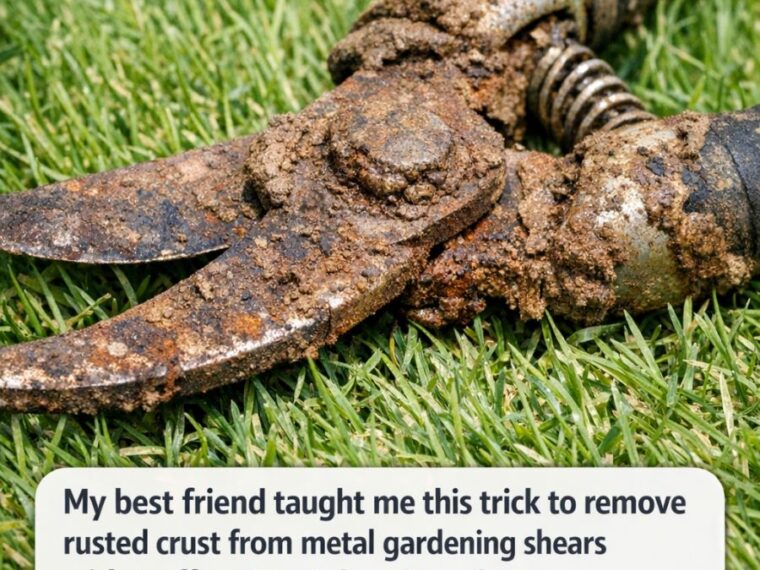
Gardening is one of those rare activities that brings both calm and purpose. It connects you to something real, something growing, something alive. But behind every healthy plant and every clean cut is a set of tools doing quiet, repetitive work. Over time, even the most reliable tools begin to show signs of wear, especially metal gardening shears. Constant exposure to moisture, plant sap, and air makes them highly vulnerable to rust. What starts as a light discoloration can quickly turn into a thick, stubborn crust that affects both performance and longevity.
I learned this the hard way. My favorite pair of shears, the ones I had used for years without thinking twice, slowly became dull, rough, and covered in rust. I tried fixing them more than once, but every attempt felt like too much effort for too little result. That’s when a simple moment with my best friend completely changed how I look at tool maintenance.
- The Day My Best Friend Looked At My Rusted Shears And Laughed
It was a quiet Saturday morning when my best friend came over to help me in the garden. As we sorted through my tools, she picked up my shears, turned them in her hands, and laughed. Not in a harsh way, but in that familiar, knowing way that immediately made me aware of how neglected they looked.
She asked why I hadn’t fixed them yet, and I admitted that nothing I tried seemed worth the effort. I had scrubbed, soaked, and even considered buying expensive products, but nothing felt simple enough to stick with.
She smiled and told me I was overcomplicating it. According to her, there was a much easier way, something that required almost no effort at all. That got my attention instantly.
- Why Rusted Crust Builds Up On Gardening Shears So Fast
Rusted crust doesn’t appear overnight, but it builds faster than most people realize. Every time you use your shears, they come into contact with moisture from plants, tiny particles of soil, and sticky sap. Even if they look clean afterward, these elements remain on the surface.
When moisture meets oxygen, oxidation begins. That’s the chemical reaction behind rust. Over time, leftover residue traps more moisture, creating the perfect environment for rust to spread. Without regular cleaning, this process accelerates, turning a light layer into a thick, crusty buildup that becomes harder to remove.
- The Zero-Effort Trick My Best Friend Swears By
The method my friend shared was surprisingly simple. It involved using white vinegar and baking soda, two basic household ingredients, to remove rust with minimal effort.
The idea is straightforward. Vinegar contains acetic acid, which reacts with rust and helps dissolve it. Baking soda, on the other hand, acts as a gentle abrasive that removes any remaining residue after the soak.
What makes this method so appealing is that it doesn’t rely on physical effort. Instead of scrubbing endlessly, you let the solution do most of the work for you.
- The Simple Household Ingredients You Already Have
To try this method, you don’t need anything complicated. A few everyday items are enough.
White vinegar is the main ingredient. Its acidity is what breaks down the rust over time. Baking soda is used afterward to clean off any remaining particles. You’ll also need a container large enough to hold your shears and something soft, like a cloth or sponge, for wiping them down.
Because these are common household items, there’s no need to buy specialized products, which makes the process both convenient and cost-effective.
- Step-By-Step: Setting Up The Soak So It Works While You Relax
The process begins by filling a container with enough white vinegar to fully submerge the metal parts of your shears. It’s important that every rusted area is covered so the solution can work evenly.
Once the shears are placed in the vinegar, there’s nothing else to do. This is where the method truly becomes effortless. Instead of standing there scrubbing, you can simply leave them to soak and go about your day.
- How Long To Leave The Shears So The Rust Lifts Itself
The soaking time depends on how severe the rust is. For light rust, a few hours may be enough. For thicker, more stubborn buildup, leaving the shears overnight works best.
During this time, the vinegar slowly reacts with the rust, loosening it from the metal surface. What would normally require force and effort begins to break down on its own.
continue reading in page 2