- The Satisfying Rinse-And-Wipe Reveal
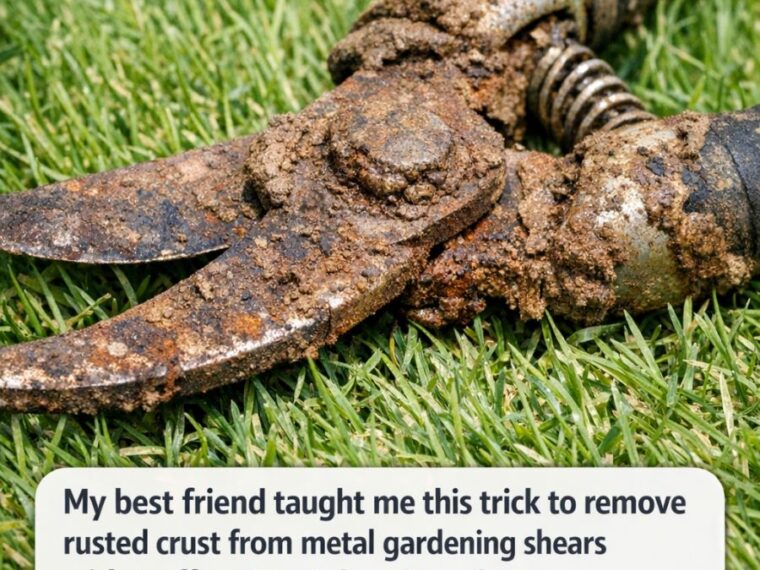
After soaking, the transformation becomes visible. When you remove the shears and rinse them under water, much of the rust will already be gone.
For any remaining spots, a small amount of baking soda applied with a soft cloth is enough to lift the rest. The difference is immediate. The rough, crusty surface is replaced by smooth, clean metal.
It’s one of those moments where the result feels surprisingly satisfying compared to the minimal effort involved.
- A Quick Sharpen-And-Oil To Make Them Feel Brand-New
Once the rust is removed, a little extra care can make the shears feel completely restored. Lightly sharpening the blades improves cutting performance, making each cut clean and precise again.
Applying a thin layer of oil afterward protects the metal from moisture. This step helps prevent rust from returning and keeps the shears in good condition for longer.
- Common Mistakes That Make Rust Removal Way Harder Than It Needs To Be
One of the most common mistakes is not allowing enough soaking time. Rushing the process often leads to incomplete results and unnecessary scrubbing.
Another mistake is failing to dry the shears properly. Any leftover moisture can quickly lead to new rust forming, undoing all the progress.
Trying to force the process instead of letting the solution work naturally is what makes rust removal feel difficult when it doesn’t have to be.
- How To Keep Your Shears Rust-Free With Almost No Maintenance
Preventing rust is much easier than removing it. A simple wipe after each use can remove moisture and residue before they cause problems.
Storing the shears in a dry place also reduces exposure to humidity. Occasionally applying a small amount of oil adds a protective layer that keeps the metal safe.
These small habits take very little time but make a big difference in the long run.
- When This Trick Isn’t Enough—And What To Try Next
In some cases, especially when rust has been left for too long, the damage may go deeper than surface buildup. If the metal is pitted or weakened, stronger treatments or professional sharpening may be needed.
If the shears no longer cut properly even after cleaning, it may be time to consider replacing them. However, for most everyday rust issues, this simple method is more than enough.
What this experience taught me is that not every problem needs a complicated solution. Sometimes, the easiest method is also the most effective. And once you realize that, taking care of your tools no longer feels like a chore, but just another small part of enjoying your time in the garden.