
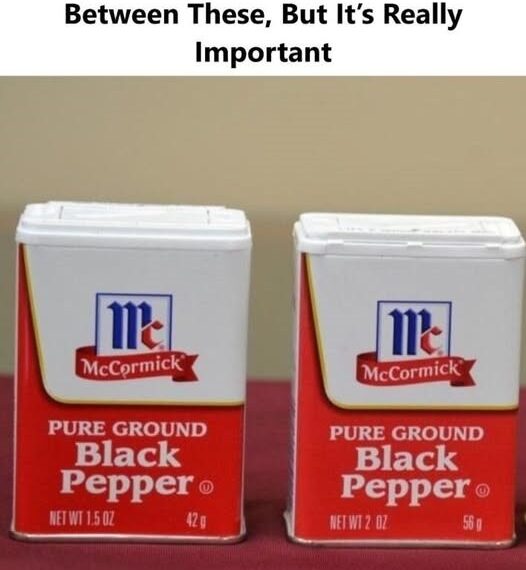
Most People Can’t Spot the Difference Between These, But It’s Really Important – Here’s How to Tell Them Apart Step by Step
In our fast-paced, visually saturated world, many things look similar on the surface — but looks can be deceiving. Whether in food, health, technology, or daily habits, seemingly tiny differences can carry major consequences. The phrase “most people can’t spot the difference between these, but it’s really important” holds more truth than most realize. In this article, we’ll explore a few commonly confused pairs and provide you with step-by-step methods to distinguish them — because knowing the difference could make a real impact on your health, safety, and decision-making.
1. Whole Wheat vs. Multigrain Bread
Why It Matters:
Whole wheat bread contains the entire grain kernel and is richer in fiber and nutrients, while multigrain may include refined grains with less nutritional value.
Step-by-Step Method to Tell the Difference:
- Read the label: Look for “100% whole wheat” as the first ingredient. “Multigrain” just means multiple grains were used — not necessarily whole.
- Check the fiber content: Whole wheat usually contains more than 2g of fiber per slice.
- Feel the texture: Whole wheat tends to be denser and grainier.
- Color isn’t reliable: Both can be brown — look past appearance to ingredients.
Most People Can’t Spot The Difference Between These, But It’s Really Important
2. Dehydration vs. Hunger
Why It Matters:
Dehydration can be mistaken for hunger, leading to overeating and continued dehydration — a cycle that affects metabolism, energy, and clarity.
Step-by-Step Method to Tell the Difference:
- Drink a glass of water: Wait 15 minutes.
- Notice your body’s reaction: If the sensation disappears, it was likely thirst.
- Check your mouth and skin: Dry mouth or less elastic skin is a dehydration sign.
- Observe timing: Hunger follows a more gradual onset; thirst can strike quickly.
3. Fake News vs. Real News
Why It Matters:
Spreading misinformation can harm reputations, cause panic, or lead to poor decisions.
Step-by-Step Method to Tell the Difference:
- Verify the source: Trusted news agencies have a history of accuracy.
- Check the date: Some viral stories are years old.
- Look for sensational language: Fake news often uses emotional or extreme words.
- Cross-reference the story: If it’s real, multiple reputable sources will cover it.
- Investigate the author: See if they have credibility or a history of fact-checking.
4. Food Allergy vs. Food Intolerance
Why It Matters:
An allergy can cause life-threatening reactions, while intolerance causes discomfort. Mixing them up can be dangerous.
Step-by-Step Method to Tell the Difference:
- Track symptoms: Allergy = immediate reaction (e.g., hives, anaphylaxis); intolerance = delayed digestive discomfort.
- See a doctor: Allergy tests (IgE) vs. intolerance assessments (like breath tests).
- Use elimination diets: Slowly reintroduce foods to test tolerance (only under guidance).
- Note the amount: Intolerance reactions vary by quantity; allergies can react even to trace amounts.
5. Venomous vs. Poisonous Creatures
continue reading in page 2