8. How to Relocate an Egg Case Without Harming It
If the egg case is in a place where it might get damaged, you can move it carefully.
The safest way is to cut the small branch or surface it’s attached to, instead of pulling it off. Then place it somewhere protected, like inside a shrub or along a fence in a quiet area.
Keep it upright and stable so the structure isn’t damaged. This gives the mantises the same chance of survival as in the original spot.
9. Why Gardeners Appreciate Praying Mantises
Praying mantises are valued because they help maintain balance in the garden.
They feed on insects that damage plants, reducing the need for sprays or chemicals. This makes gardening more natural and sustainable.
Beyond that, they’re also fascinating to observe. Their movements, hunting style, and calm posture make them one of the most interesting insects you can have around.
10. Common Mistakes: Confusing It With Something Else
Many people mistake mantis egg cases for:
- Wasp nests
- Fungus growth
- Dirt or foam residue
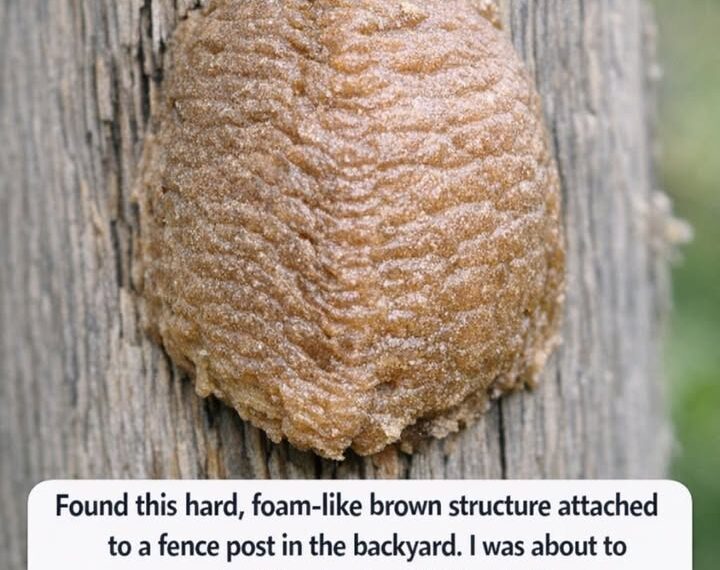
The key differences are texture and structure. Wasp nests have visible holes and a papery look. Fungus is usually softer and irregular.
A mantis ootheca is compact, ridged, and firmly attached, with a uniform shape.
Recognizing these details helps you avoid removing something beneficial by mistake.
11. Turning a Strange Discovery Into Something Meaningful
What first looks strange or even unpleasant can actually become something interesting and educational.
Watching how nature works up close, especially something as unique as a mantis egg case, can change how you see your surroundings.
It’s a reminder that even small, unnoticed details in your backyard play a role in a larger system. And sometimes, the best thing you can do is simply leave them alone and let nature do its work.