
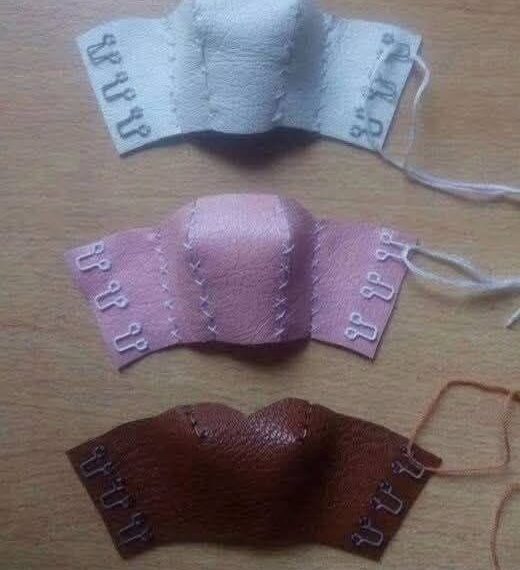
Perhaps the most fascinating thing about objects like these is how simple their construction appears.
There are no complicated mechanical parts, electronic components, or expensive materials. Instead, the design relies on carefully shaped material, stitching, padding, and fastening details.
This reflects an important aspect of traditional craftsmanship: tools were often adapted to the specific needs of the person using them.
Rather than purchasing specialized equipment, artisans could make or modify protective accessories using materials already available in their workshops.
The result was often something inexpensive, reusable, and perfectly suited to a particular task.
Why Do They Come in Different Colors?
The photograph shows three similar objects in white, pink, and brown.
The different colors could simply reflect the use of different leather or fabric materials, variations in finishing, or decorative choices.
The brown example, for instance, appears to have a more textured surface, while the lighter-colored pieces have a softer, fabric-like appearance.
Without knowing their manufacturer or original context, it is difficult to determine whether the colors had any particular meaning or indicated different uses.
Old Handmade Objects Often Have Fascinating Stories
One of the most interesting things about traditional tools is that their appearance does not always reveal their purpose immediately.
Many objects that look unusual or even mysterious today were once ordinary parts of everyday working life.
They were designed to solve small but important problems: protecting a finger, reducing pressure, preventing injuries, or making repetitive tasks more comfortable.
Objects like these are a reminder that practical innovation did not begin with modern technology. Long before factories and mass production, people were already finding clever ways to make their work easier.
Have you ever seen anything like these before? Do you recognize what they are called or which traditional craft uses them?