
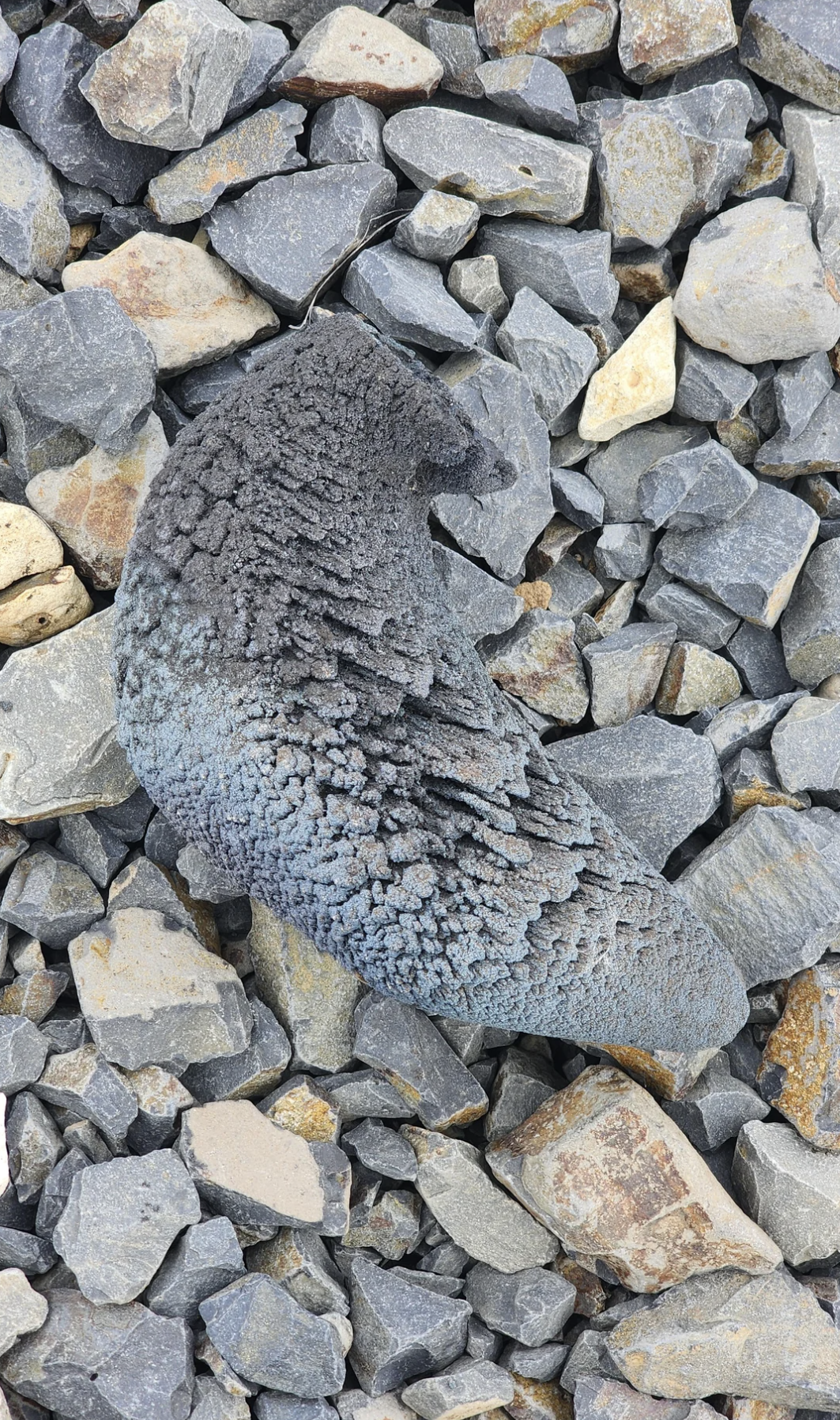
I’ve observed railroad tracks accumulate unusual items, and it’s not limited to old spikes or rusted scrap. There are those things which will cause you to pause while walking and then take another glance at the item. This chunk of rail grinding machine residue caused that exact same reaction. At first glance, it resembled either a fossilized blob or a charred loaf of bread. Both ugly and interesting!
At least after knowing what it was did I feel that it became more interesting.
What It Is
Rail grinding machine residue refers to hardened buildups that fall off a rail grinding machine. The rail grinding machine grinds the top of the rail to ensure that the trains have a continuous, smooth and correctly surfaced way to continue running on their tracks.
When trains travel along the rails, the steel continually wears away. Therefore, railroads use grinding machines to grind the top of the rail (the rail head) before such wear causes greater problems. When a train passes over the rail being ground by the grinding machine, hot metal dust as well as tiny filings are thrown off from the grinding process. These materials may stick to the machine, become compacted and build up and eventually break free and drop off as hardened lumps.
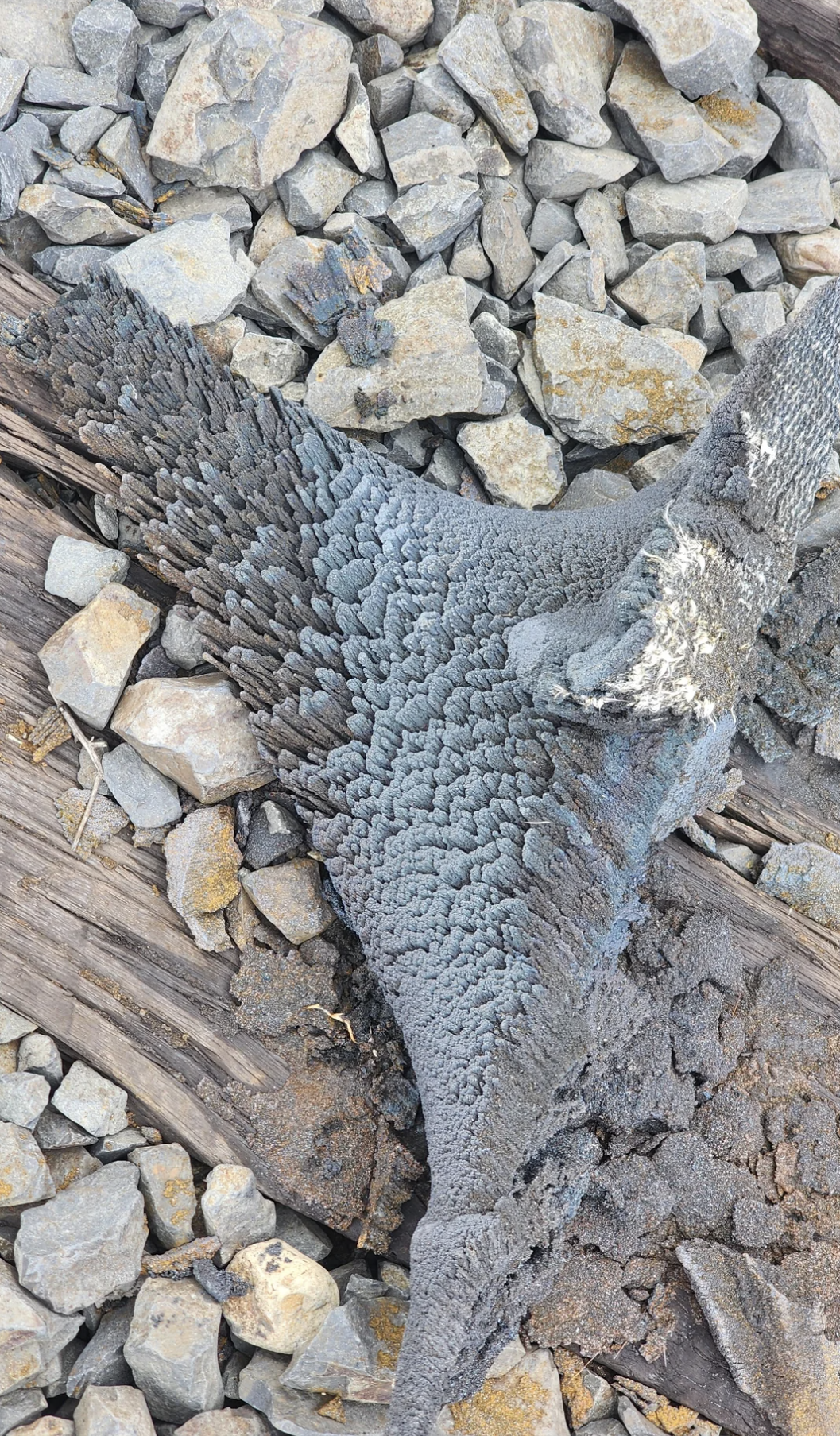
This is that strange chunk resting upon the rocks.
How It Looks So Odd
Texture is what tricks most people into thinking that this is something completely different than typical scrap metal.
Rail grinding machine residue does not resemble ordinary scrap metal. Rail grinding machine residue has an appearance of layers or flakes, as if it were living. It resembles coral rather than steel. This is due to how it forms through compacted grinding debris, heat, and oxidation over time.
Also, it typically weighs more than its size would suggest. That aspect feels very “railroad” to me; many track-side objects appear reasonable sized until you attempt to pick them up and suddenly realize you made a poor decision.
Where It Tends To Show Up Around Railroad Crossings
These types of residues tend to show up around railroad cross-overs, switches, etc., which receive more abuse than straightaway rail. The wheels strike the rail much harder here; therefore, the rail wears down faster. Also, grinding machines tend to spend more time working in these locations where more residue tends to drop off nearby.
Therefore, if you happen to find one of these large lumps near a railroad crossing, chances are high that it is not coincidence but rather evidence that maintenance took place in that area.
Why I Consider Them Interesting
I find railroad-related leftover items interesting as they help tell the stories about the trains themselves.
Everyone notices the locomotive. I understand that. However, the smaller parts of the locomotive are important too. A piece of rail grinding machine residue tells me that railroad operations require ongoing repair and replacement activities including grinding, inspecting, replacing and adjusting/aligning. While everyone takes photos of the glamourous side of railroading, the “behind-the-scenes” work helps keep all of the various components of the railroad operating properly.
In other words, one unusual grayish-colored boulder (lump) on the ballast can be quite interesting when you consider the fact that it is evidence of a great deal of background activity occurring every day.
Final Thoughts
Rail grinding machine residue is simply hardened grinding buildup from a rail grinding machine.
However, each residue provides insight into a segment of railroad operation activity that occurs daily. Each residue represents the “hidden effort” of maintaining the railroad infrastructure. Each residue demonstrates why railroad tracks remain operational. Lastly, each residue converts an uncommon object lying on the ground into a small piece of railroad history.
And who knows? One might say that this unattractive brown-gray mass resembles a burnt rock with an attitude.