
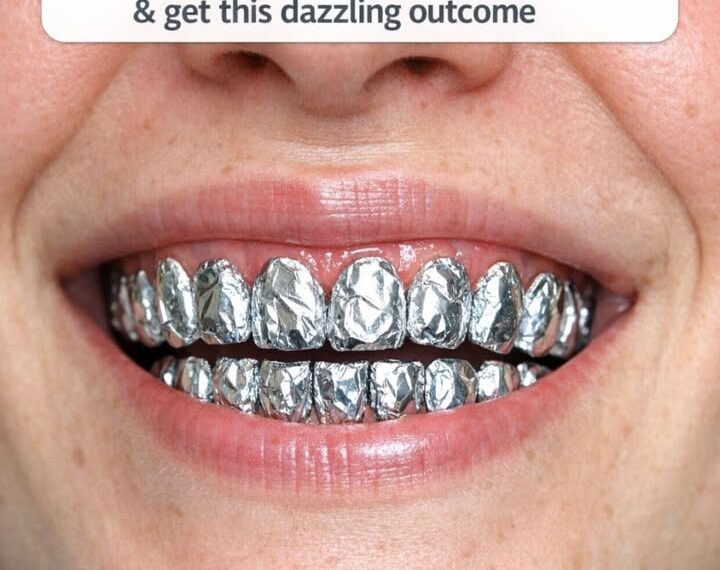
In the pursuit of a brighter smile, many people explore both traditional treatments and unconventional home remedies. One trend that has recently gained attention is the idea of wrapping teeth in aluminum foil to achieve quick whitening results. While the concept may sound appealing, it raises important questions about safety and effectiveness.
The promise of noticeably whiter teeth using simple household items can be tempting. However, not all viral hacks are as effective as they appear. Understanding how this method works and its potential risks is essential before trying it.
1. What Really Happens When You Wrap Teeth in Aluminum Foil
This method usually involves applying a mixture of baking soda and toothpaste to the teeth, then covering them with aluminum foil. The foil is believed to enhance the whitening process by holding the mixture in place.
In reality, aluminum foil does not chemically interact with the ingredients to improve whitening. It simply presses the mixture against the teeth, offering no added benefit beyond prolonged contact.
2. The Viral Origin of the Foil Whitening Trend
The popularity of this hack largely comes from social media, where quick and dramatic transformations attract attention. Videos and posts often showcase impressive before-and-after results without scientific evidence.
These trends spread rapidly because they promise fast results using everyday items, making them especially appealing to a wide audience.
3. Understanding Enamel and Metal Contact
Tooth enamel is the hardest substance in the human body, but it can still be damaged. It protects the inner layers of the teeth and is essential for long-term oral health.
When aluminum foil comes into contact with teeth, especially those with metal fillings, it may create mild electrical reactions. This can lead to discomfort or sensitivity, rather than any whitening effect.
4. Short-Term Effects You Might Notice
Some people report that their teeth appear slightly brighter after using this method. This is usually due to the cleaning action of baking soda rather than any real whitening process.
Temporary sensitivity is also common, particularly if the mixture is abrasive or used too aggressively.
5. Potential Risks to Be Aware Of
Frequent use of baking soda can wear down enamel over time, increasing the risk of cavities and sensitivity. The addition of aluminum foil does not reduce this risk and may even introduce discomfort.
For individuals with dental work such as fillings or crowns, the contact with metal can cause unpleasant sensations or irritation.
6. Why Dental Professionals Advise Against It
Dentists generally discourage this method because it lacks scientific support and carries potential risks. Professional whitening treatments are designed to be both safe and effective.
Unverified DIY techniques, on the other hand, can lead to unintended damage without delivering reliable results.
continue reading in page 2